

The restaurant and bar industry took a significant hit in February 2026, and the ripple effects are still being felt across kitchens, dining rooms, and back offices throughout the country. Nearly 30,000 jobs vanished in a single month, a gut punch for an industry that had been quietly building momentum through eight consecutive months of employment growth. For the millions of workers, operators, vendors, and professionals who make their living in food service, this isn’t just a data point. It’s a reality that touches paychecks, schedules, and the everyday pulse of one of America’s most dynamic and resilient industries.
What caused it, what it means, and where the industry goes from here are questions worth exploring carefully, not with alarm, but with the kind of informed perspective that helps food service professionals make smarter decisions. Between a historic winter storm, a broader economic slowdown, and the long shadow of pandemic-era losses that some segments are still recovering from, February’s numbers tell a layered story. One that deserves more than a headline.
What the Numbers Are Really Telling Us
Eating and drinking places lost nearly 30,000 jobs in February 2026, on a seasonally adjusted basis, according to preliminary data released by the Bureau of Labor Statistics. This marked the first negative month for restaurant employment after eight consecutive months of growth.
That’s not a small footnote. Eight months of growth, wiped out in a single reporting period. For an industry that has been fighting and clawing its way back from pandemic-era devastation, this setback stings, even if it comes with important context.
The broader U.S. labor market was also struggling that month. American employers cut 92,000 positions overall, pushing the unemployment rate up to 4.4% from 4.3% in January. Economists had forecast a net gain of roughly 50,000 jobs, making the final numbers a significant miss.
The restaurant and bar sector wasn’t alone in the downward slide, but because it employs millions of Americans at every level of skill and experience, from dishwashers to executive chefs, the losses hit differently. The food service world is deeply human, and every one of those numbers represents a real person who showed up less, got fewer hours, or saw their job temporarily evaporate.
Winter Storm Fern: The Catalyst Behind the Numbers
You can’t talk honestly about the February jobs data without talking about Winter Storm Fern. From January 23 to January 27, 2026, a massive winter storm swept across a broad stretch of North America, bringing catastrophic ice and snow from Northern Mexico through the Southern and Northeastern United States and into Canada. Twenty-four U.S. state governors issued emergency declarations, over a million customers lost power, and damages exceeded $4 billion.
Snowstorms can drive a 10–40% decline in in-person dining, while cold, wet days are typically associated with a meaningful drop in daily revenue. Dinner service is often hit hardest, as customers opt to stay home rather than navigate icy roads and unsafe conditions.
The storm’s timing was devastating for the industry. In cities like Dallas and Memphis, restaurant sales and foot traffic were down by more than 90% on January 25, the worst single day of the storm. Overall, restaurant sales fell 1.8% and foot traffic dropped 3.6% year-over-year in the second half of January, and when adjusted for inflation, sales fell 5.6% year-over-year by the end of the month.
Major restaurant chains reported similar challenges. Brinker International cited negative impacts from Winter Storm Fern on its quarterly earnings call, and Chipotle’s CFO noted a 100-basis-point impact due to the storm’s disruptions.
These aren’t abstract statistics. They represent closed dining rooms, reduced shifts, inventory losses, and operators scrambling to stabilize payroll when customers couldn’t or wouldn’t come through the door.
The Leisure and Hospitality Sector Took a Broad Hit
The restaurant and bar segment doesn’t exist in a vacuum. It’s part of the larger leisure and hospitality umbrella, and that entire ecosystem felt the February chill.
The leisure and hospitality segment overall lost 27,000 jobs in February, reflecting the widespread impact of winter conditions on the service economy as a whole.
For workers in this space, bartenders, hosts, servers, line cooks, prep cooks, food runners, and more, this kind of job loss touches not just their paychecks but their professional identity. Many of these workers hold florida food handlers card credentials, train for years to develop their craft, and build their livelihoods around the hospitality industry. A storm event that costs nearly 30,000 jobs isn’t just an economic blip, it’s a human story.

A Long Road Back: The Full-Service Restaurant Struggle
To truly understand February’s numbers, you have to look at where full-service restaurants have been. Full-service restaurants lost nearly 3.7 million jobs during the first two months of the pandemic, and as of January 2026, full-service employment was still 204,000 jobs, or 3.6%, below pre-pandemic readings.
That is a staggering number. More than 200,000 jobs below where the industry was before COVID-19 arrived. Six years later, and full-service restaurants are still digging out of that hole.
The good news is that the momentum heading into 2026 had been promising. Full-service restaurants had expanded staffing at a healthy pace in recent months, adding a net 76,000 jobs between January 2025 and January 2026. The three limited-service segments combined, snack and coffee shops, quick-service, and fast casual, added 82,000 jobs over that same period.
Progress. Real, measurable progress. That makes February’s setback all the more frustrating, but it also provides a reason for cautious optimism. The industry was moving in the right direction before the storm arrived.
Some Bright Spots in a Complicated Picture
The February data isn’t all doom and gloom. Context matters enormously when reading labor statistics, and there are genuine reasons to feel encouraged about where the industry stands.
As of February 2026, eating and drinking places were approximately 0.3% above February 2020 levels, about 42,000 jobs above pre-pandemic readings. The National Restaurant Association noted that February’s drop doesn’t necessarily indicate a prolonged downturn, given the outsized impact of widespread winter storms.
That’s meaningful. The industry, in totality, has clawed back more jobs than it had before the pandemic, a remarkable feat given the scale of the losses suffered in 2020. Employment at snack and nonalcoholic beverage bars, including coffee, doughnut, and ice cream shops, was 201,000 jobs, or 25%, above February 2020 readings. Employee counts at quick-service and fast-casual restaurants were 96,000 jobs, or 2.1%, above pre-pandemic levels.
These segments have not just recovered, they have thrived. For those in the food service world looking to understand where growth is happening, these numbers point to genuine vitality in certain parts of the market.
You can track the latest employment trends directly through the U.S. Bureau of Labor Statistics Food Services and Drinking Places data, which offers detailed breakdowns of industry employment by segment and region.
Geographic Disparity: Not All States Are Recovering Equally
One of the most important and underreported elements of this story is how unevenly the restaurant industry’s recovery has played out across the country.
More than five years after the onset of the pandemic, restaurant staffing levels remain below pre-pandemic readings in 18 states and the District of Columbia. West Virginia leads this group, with nearly 6% fewer eating and drinking place jobs than it had before the pandemic. Maine, New Mexico, Massachusetts, and Illinois are also significantly below their pre-pandemic restaurant employment levels.
On the flip side, several mountain states have climbed well beyond pre-pandemic levels. Idaho leads the country with restaurant employment 20% above pre-pandemic readings, followed by Utah at 14% and Nevada at 13%.
This kind of regional divergence matters for anyone working in or with the food service industry. Where you operate, where you train your workforce, and where you source your talent makes a real difference in the labor environment you face. States with strong recovery trajectories often have tighter labor markets, higher competition for qualified workers, and more demand for properly credentialed employees.

What This Means for Workers and Operators Right Now
If you work in Florida’s food service industry or you manage a team that does, the February numbers carry a particular message: the industry is resilient, but it is not immune to disruption. Weather events, economic headwinds, and shifting consumer behavior can all create short-term turbulence that has long-term effects on staffing, scheduling, and revenue.
For employers, this means the value of a well-trained, properly certified workforce has never been higher. Workers who hold recognized credentials, like florida food handler certificates best price, are more likely to stay employed through downturns because they bring documented knowledge and professionalism to the table. Certified workers are assets, not just labor costs.
For workers, this is a reminder that investing in your own professional development pays off. When hiring slows and competition for available positions increases, the candidates with verifiable training and credentials rise to the top. Whether you’re entering the industry for the first time or looking to advance, holding a recognized certification demonstrates commitment and competence to any employer reviewing your application.
The National Restaurant Association’s research portal offers ongoing data and insights about industry employment trends, and it’s worth bookmarking if you like staying informed about where the industry is headed.
The Bigger Economic Picture: Why February Happened
It’s important to understand that restaurant job losses in February didn’t happen in isolation. Overall nonfarm payroll employment edged down by 92,000 in February, following a gain of 126,000 in January. Employment in health care declined due to strike activity, while information sector employment and federal government employment continued to trend down.
During the first two months of 2026, the U.S. economy added just 34,000 net positions, following a modest increase of 116,000 positions for all of 2025.
That’s a challenging macroeconomic backdrop for any consumer-facing business. When economic uncertainty rises, discretionary spending, including dining out, often softens. People tighten their budgets, choose home cooking more often, and cut back on meals out. That behavioral shift, multiplied across millions of households, shows up directly in restaurant employment figures.
At the same time, operators are navigating elevated commodity costs. Beef prices are expected to remain elevated for the foreseeable future, with some chains forecasting commodity inflation of 7% for 2026. American Recruiters When input costs rise and customer traffic softens, margins tighten, and that often means leaner staffing.
For a deeper look at current job openings and labor turnover in the food service sector, the Bureau of Labor Statistics JOLTS data provides monthly insights into hiring, separations, and open positions across industries, including leisure and hospitality.
Why Florida’s Food Service Industry Stays Resilient
Florida occupies a unique position in the national restaurant employment landscape. As one of the country’s top tourism destinations, the Sunshine State benefits from year-round demand that insulates it from the kind of winter weather disruptions that crushed employment in colder regions in February.
While states across the South and Northeast were digging out from Winter Storm Fern and watching their dining rooms sit empty, Florida’s food service industry largely continued operating, serving the tourists, snowbirds, and residents who keep its restaurants, bars, cafés, and food trucks humming all year long.
This resilience makes Florida an especially important state for food service professionals to stay sharp, stay certified, and stay ready. When the rest of the country is struggling with weather-related slowdowns, Florida’s hiring doesn’t stop. Operators here still need experienced, credentialed staff who can hit the ground running.
That’s precisely why maintaining current credentials matters so much. Whether you’re a long-tenured restaurant professional or someone new to the industry, having your food handler certificates florida up to date keeps you eligible for the best opportunities when they arise.
The Delivery and Takeout Pivot: A Lasting Industry Shift
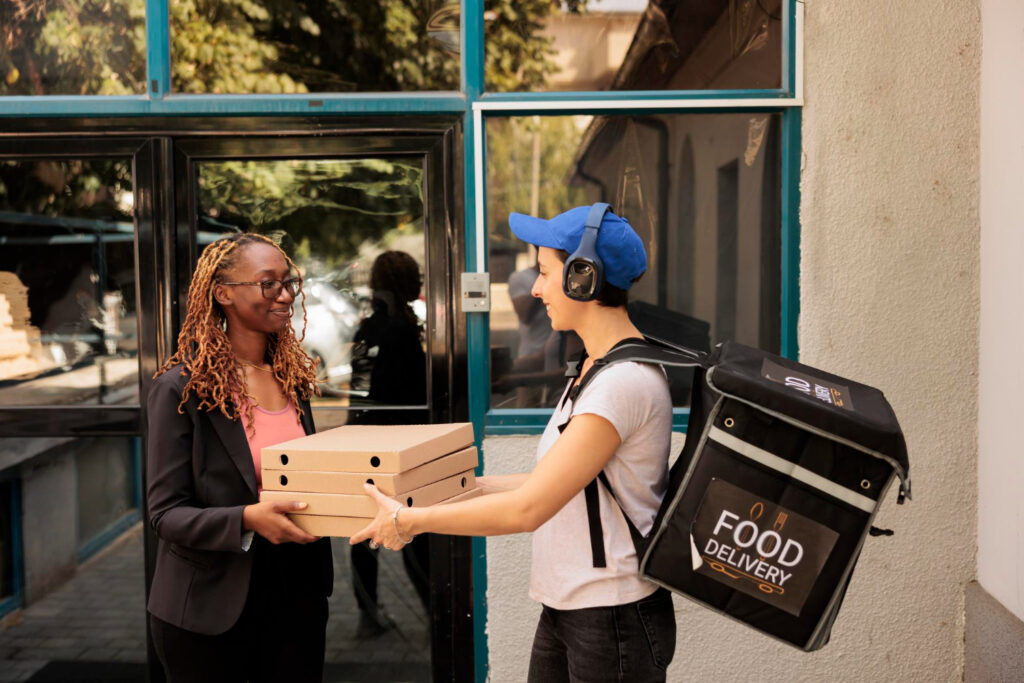
One of the more interesting dimensions of the February story is how delivery and takeout continued to serve as a critical buffer for restaurants facing weather disruptions. When dining rooms slow, delivery and takeout frequently surge. During extreme cold, comfort-food categories, pizza, wings, pasta, soups, and family meals, often see increased order volume, creating an important opportunity for restaurants that pivot quickly.
This pivot has become a permanent feature of the industry landscape. Operators who once viewed off-premise dining as a secondary revenue stream have built it into the core of their business model. And that shift has staffing implications, it changes the kinds of roles that are in demand, the skills that matter most, and the ways that workers need to be trained and certified.
For food service professionals, understanding this evolving landscape is part of what it means to be a well-rounded industry participant. The restaurants that thrived through February’s disruptions weren’t just lucky, they had built flexible systems and versatile teams that could absorb the shock and keep serving customers.
Looking Ahead: Can the Industry Sustain Its Recovery?
The honest answer is: probably yes, but not without effort.
The National Restaurant Association’s chief economist noted that while it’s too soon to fully quantify the storm’s impact, a rebound is likely in the coming weeks, with pent-up demand building as people grow tired of cooking at home and look to go out again.
That rebound psychology is a real and documented phenomenon. After major disruptions, whether storms, economic contractions, or other external shocks, dining out tends to recover as consumers seek the social experience and convenience that restaurants uniquely provide.
The long-term trajectory of the industry remains upward, even if February was a painful detour. The fundamentals that drive restaurant demand, population growth, tourism, urbanization, dual-income households with less time to cook, and the irreplaceable social function of dining out, haven’t changed.
What has changed is the level of professionalism, compliance awareness, and operational sophistication that the best operators bring to their businesses. In a tighter labor market and a more demanding regulatory environment, working with experienced professionals who understand the industry deeply is more valuable than ever. That’s as true for operators seeking qualified team members as it is for those navigating complex disputes or compliance questions, where a food service expert witness can make a decisive difference.
Staying Informed Is Part of Staying Competitive
The food service industry rewards people who pay attention. The operators who saw February’s numbers coming, who watched the storm forecasts, tracked the labor data, and built contingency plans, were better positioned to manage through the disruption than those who were caught flat-footed.
The same principle applies to workforce management. Knowing what certifications your team needs, staying current on industry labor trends, understanding the regulatory environment in your state, these are the habits that separate strong operators from struggling ones.
If you or your team members are in the process of updating credentials, exploring Florida’s specific requirements, or simply trying to understand where the industry stands right now, the resources and expertise available at kenkuscher.com are worth exploring.
The Human Side of the Numbers
It’s easy to talk about 30,000 jobs and let the abstraction of that number do the heavy lifting. But behind every one of those positions is someone who showed up for their shift, put on their apron, and cared about the work they do. The cooks who prep before dawn. The servers who remember their regulars’ orders. The bar managers who run tight ships on a Saturday night.
The restaurant and bar industry is one of the most human industries on earth. Its losses are felt personally, locally, and immediately in ways that aggregate labor statistics rarely capture. And its recoveries, when they come, are equally personal, equally local, and equally meaningful.
February 2026 was a tough month. But the industry has been through worse and come back stronger. The trend lines, the resilience of key segments, and the fundamentals of consumer demand all suggest that what happened last month is a chapter, not the whole story.
For food service professionals across Florida and beyond, the message is clear: stay trained, stay certified, stay informed, and stay ready. Because the industry, your industry, is going to need your best.
Florida Food Handler Certificates
Avoid fines by ordering your Florida Department of Business and Professional Regulation-approved Food Worker Program certificates today. They’re available for just $4 each. Program #5552749.
Place your order online here. For additional information, you can call (561) 703-7196.
***Please note that the insightful and engaging content provided on our platform is crafted by our dedicated Marketing Department’s content writing team. While Ken Kuscher is the esteemed figure and expert within our industry, the articles and blog posts available are not personally authored by Ken.