
Running a food service operation in Florida is an incredible opportunity. The state’s year-round tourism, diverse population, and thriving dining culture make it one of the most dynamic restaurant markets in the country. But with that opportunity comes one of the most active food safety inspection regimes in the United States, and Florida inspectors are thorough, frequent, and unforgiving when they find problems.
The good news is that the violations inspectors catch most often aren’t mysterious or unpredictable. They show up again and again, in operation after operation, across every segment of the industry. That means they’re also entirely preventable, if your team knows what to look for and how to address it before an inspector walks through the door.
This is your practical guide to the five violations Florida food safety inspectors flag most frequently, what causes them, and exactly what you can do to make sure your operation never appears on that list.
1. Improper Food Temperature Control
Temperature violations are the single most common category of food safety findings in Florida, and it’s not particularly close. From food held at unsafe temperatures in steam tables and refrigeration units to improper cooling and reheating practices, temperature control failures show up in inspections across every type of food service establishment in the state.
Florida’s heat and humidity create a uniquely challenging environment for temperature management. Unlike cooler climates where ambient temperatures provide a natural buffer, Florida kitchens are fighting a constant battle against an environment that actively accelerates bacterial growth. A walk-in cooler that’s struggling on a July afternoon in Miami isn’t just an equipment inconvenience, it’s a public health risk that an inspector will cite immediately.
The Florida Department of Business and Professional Regulation requires that cold foods be held at 41°F or below and hot foods be held at 135°F or above. The danger zone, 41°F to 135°F, is where bacteria like Salmonella, E. coli, and Listeria multiply rapidly. Food that spends too long in that range becomes a liability, and inspectors know exactly how to spot it.
Common temperature violations include: storing raw meats above ready-to-eat foods in refrigerators, not cooling hot food quickly enough before refrigeration, holding food on steam tables below the required 135°F, thawing frozen food at room temperature instead of in a refrigerator or under cold running water, and failing to use or calibrate food thermometers properly.
Prevention starts with equipment and culture. Calibrate your thermometers weekly. Post temperature logs at every holding unit and require staff to document checks at set intervals throughout every shift. Build cooling protocols into your prep workflow, large batches of hot food need to be broken into smaller containers and cooled in ice baths before refrigeration. And train your entire team on why these practices matter, not just what the rules are. When staff understand the science behind temperature control, compliance becomes instinctive rather than performative.
The FDA Food Safety Modernization Act resources provide detailed science-based guidance on temperature control and food safety practices that every Florida operator should have in their training library.
2. Poor Personal Hygiene and Handwashing Failures
The second most common category of violations Florida inspectors flag involves personal hygiene, and specifically, handwashing. This one is personal, which makes it both the most preventable and the most persistent violation category in the industry.
Inspectors look for functioning handwashing sinks that are properly stocked with soap and paper towels and accessible at all times. They look for evidence that those sinks are actually being used. They observe employees, and what they see often tells a clearer story than any log or sign.
A food handler who touches their face, handles raw meat, takes out trash, or returns from a break without washing their hands is a contamination risk in every interaction that follows. Florida inspectors are trained to watch for these moments, and they will cite operations where handwashing infrastructure is compromised, blocked, or clearly underutilized.
Common hygiene violations include: handwashing sinks being used for food prep or equipment storage, soap or paper towel dispensers being empty, employees wearing gloves incorrectly, treating them as a substitute for handwashing rather than a supplement to it, bare-hand contact with ready-to-eat foods, and employees handling food while visibly ill.
The last point deserves its own emphasis. Florida’s food safety code requires that food handlers who are experiencing symptoms of illness, vomiting, diarrhea, jaundice, or sore throat with fever, be excluded from food handling duties. This is a policy that sounds obvious but is routinely violated in operations where staffing is tight and managers feel pressure to keep everyone on the floor regardless of condition. An inspector who finds an ill employee working the line will not be sympathetic to staffing constraints.
Prevention here is about culture before anything else. Handwashing has to be non-negotiable, enforced consistently, modeled by management, and never informally waived because service is busy. Post handwashing reminders at every sink. Conduct handwashing audits as part of regular shift checks. And build an illness reporting culture where employees feel safe telling a manager they’re sick without fear of losing pay or their position.
This is exactly where proper training makes the difference. Employees who hold florida food handler certificates have been formally trained on personal hygiene standards, handwashing protocols, and illness reporting requirements, giving your team a documented foundation in the practices inspectors are looking for.
3. Cross-Contamination and Improper Food Storage
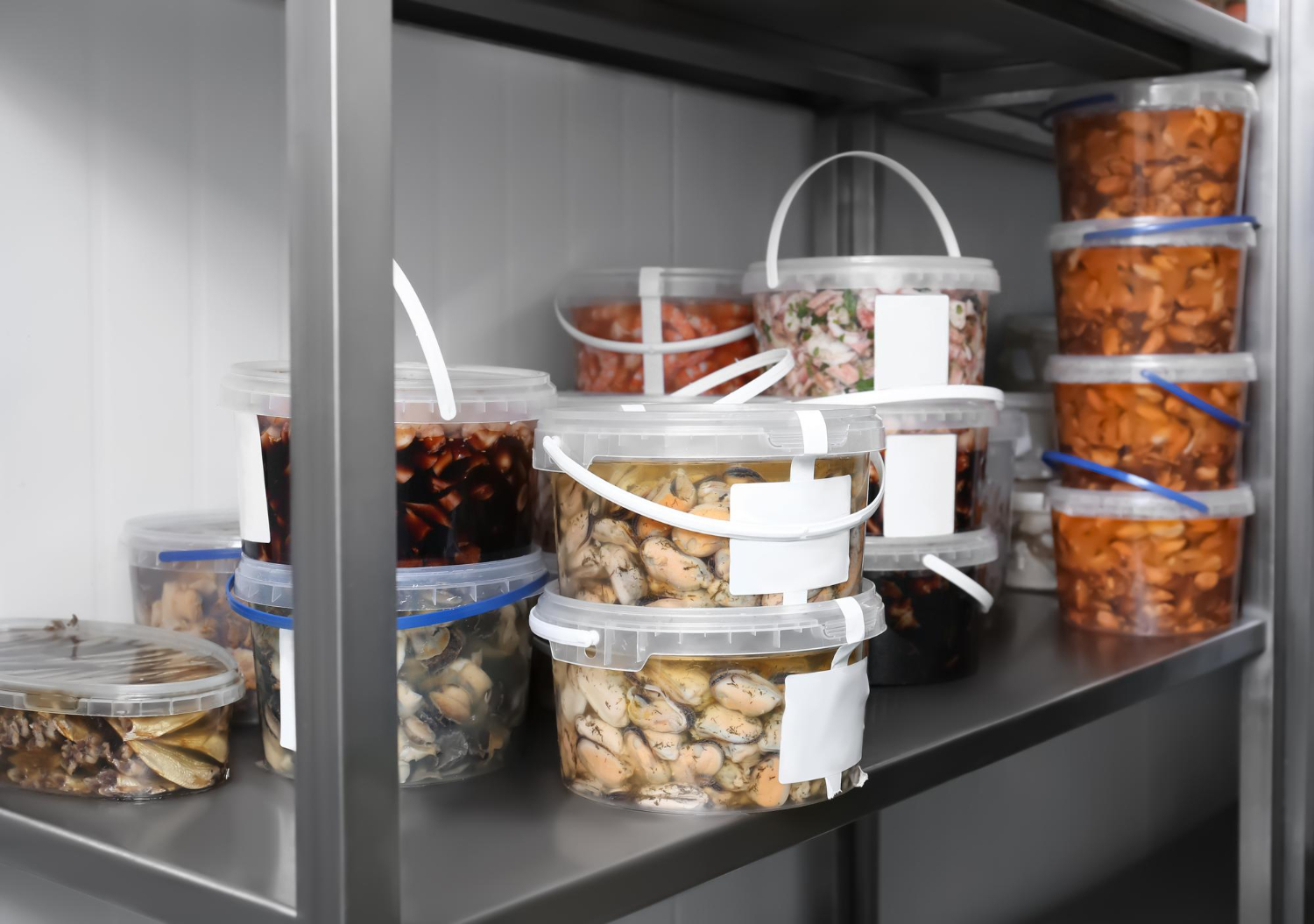
Cross-contamination violations are a consistent presence on Florida inspection reports, and they’re particularly dangerous because they’re often invisible to the naked eye. Unlike a temperature reading you can measure or a dirty surface you can see, cross-contamination happens in the spaces between proper practices: the cutting board used for raw chicken and then vegetables without sanitizing in between, the shelf where raw beef is stored above ready-to-eat salad ingredients, the prep gloves touched to a phone and then back to food.
Florida inspectors are looking for systems, or the absence of them. A well-organized walk-in cooler with raw proteins stored on the bottom shelf, separated from produce and ready-to-eat items, tells an inspector that management has thought through the contamination risk and built a protocol around it. A disorganized cooler where proteins, produce, and prepared items share space without clear separation tells a very different story.
Common cross-contamination violations include: improper storage order in refrigerators and walk-in coolers, using the same prep surfaces or utensils for raw proteins and ready-to-eat foods without sanitizing in between, improperly labeled or undated containers creating uncertainty about food age and safety, storing chemicals or cleaning supplies near or above food items, and failing to properly cover stored food.
The hierarchy of refrigerator storage is something every food handler should be able to recite: ready-to-eat foods on top, then whole fish, then whole cuts of beef and pork, then ground meats, then raw poultry at the very bottom. This sequence is based on internal cooking temperatures, the higher the required cooking temperature, the lower the item goes in storage, and Florida inspectors will walk your cooler with this hierarchy in mind.
Prevention requires both physical organization and procedural discipline. Color-coded cutting boards and utensils, one color for raw poultry, another for produce, another for ready-to-eat items, make contamination prevention visual and intuitive. Clear labeling protocols for all stored food, with preparation dates and use-by dates marked consistently, give inspectors confidence that your operation is tracking food age responsibly.
4. Pest and Vermin Activity
Florida’s climate is paradise for humans, and unfortunately, also for pests. Roaches, rodents, flies, and ants thrive in the state’s warm, humid environment, and they are drawn to food service establishments with a persistence that demands active, ongoing countermeasures. An inspector who spots evidence of pest activity, droppings, gnaw marks, live insects, or structural vulnerabilities that allow entry, will issue citations that can range from serious to immediately critical depending on the severity.
Critical pest violations, live roaches in food prep areas, rodent droppings in a storage room, flies actively landing on exposed food, can result in emergency closures. These aren’t the violations you want to discover when an inspector is standing in your kitchen. They’re the violations you want to discover during your own internal checks, weeks before any official visit.
Common pest-related violations include: gaps or cracks in walls, floors, and door frames that allow pest entry, floor drains that aren’t properly screened or maintained, standing water or moisture accumulation in storage areas, improperly stored dry goods that create nesting opportunities for rodents, and evidence of pest activity in storage areas or behind equipment.
Prevention is a combination of structural vigilance and professional pest management. Conduct monthly walkthroughs specifically focused on pest entry points, check the seals around pipes, the gaps under exterior doors, the condition of screens on windows and vents. Work with a licensed pest control provider on a regular schedule, and keep documentation of those visits. Inspectors look favorably on operations that have active, documented pest management programs, it demonstrates proactive management rather than reactive crisis response.
Food storage discipline matters here too. Dry goods stored in sealed containers rather than open bags eliminate the easy food sources that attract and sustain pest populations. FIFO, first in, first out, rotation practices keep older stock moving and prevent the accumulation of deteriorating product that creates both pest attraction and food safety risk.
The Florida Department of Business and Professional Regulation’s Division of Hotels and Restaurants oversees food service inspections across the state and publishes inspection reports and licensing resources that every Florida operator should be familiar with.

5. Inadequate Sanitization of Equipment and Surfaces
The fifth most common violation category Florida inspectors flag involves the sanitization of food contact surfaces and equipment, and it’s an area where the gap between what operators think is happening and what’s actually happening can be significant.
Cleaning and sanitizing are not the same thing. Cleaning removes visible dirt and debris. Sanitizing kills pathogens on a surface that has already been cleaned. Both steps are required, in that order, for food contact surfaces, and inspectors understand the distinction completely. A surface that looks clean but hasn’t been properly sanitized can carry invisible microbial contamination that represents a genuine public health risk.
Common sanitization violations include: wiping cloths stored improperly or used on multiple surfaces without being refreshed in sanitizer solution, sanitizer concentrations that are either too low to be effective or too high to be safe, food contact surfaces that aren’t being sanitized at the required frequency, equipment like slicers, can openers, and blenders that aren’t being properly disassembled and cleaned between uses, and ice machines with mold or slime buildup that contaminates every drink served.
That last point, the ice machine, is one of the most consistently cited violations in Florida food service inspections and one of the most overlooked in day-to-day operations. Ice machines are out of sight and therefore out of mind for many teams, and they require regular cleaning and sanitizing on a documented schedule. An inspector who finds mold inside your ice machine is looking at a direct food contamination risk, and citations in this area can be severe.
Prevention requires documented protocols and regular verification. Sanitizer test strips should be used at every setup and periodically throughout the day to confirm that sanitizer concentrations are within the effective range. Wiping cloths in sanitizer solution should be changed regularly, the solution loses effectiveness over time. Equipment disassembly and cleaning schedules should be posted, assigned to specific team members, and verified by management.
Training is fundamental here. Employees who understand why sanitization matters, who can articulate the difference between cleaning and sanitizing and explain what happens when the process is skipped, are far more likely to execute it consistently and correctly. This is core content in formal food handler training, which is one of the most important reasons why making sure every member of your team holds a valid florida food handlers card from a reputable provider pays dividends on inspection day and every day in between.
The Pattern Behind the Violations
Looking across these five violation categories, a clear pattern emerges: the most common food safety failures in Florida aren’t random accidents. They’re the predictable result of gaps in training, gaps in culture, and gaps in management systems.
Temperature violations happen when staff haven’t been trained on the science of food safety and when management isn’t monitoring compliance consistently. Hygiene violations happen when the culture of the operation doesn’t treat handwashing as genuinely non-negotiable. Cross-contamination happens when organizational systems aren’t in place and food storage protocols haven’t been established and enforced. Pest issues happen when structural vigilance lapses and when the proactive mindset required to stay ahead of Florida’s pest pressure isn’t part of the operation’s DNA. Sanitization failures happen when the distinction between cleaning and sanitizing isn’t understood and when verification systems aren’t built into the daily routine.
Every one of these gaps is closeable. Every one of these violations is preventable. And the investment required to prevent them is dramatically smaller than the cost of being cited, in fines, in remediation, in reputational damage, and in the loss of consumer trust that follows a failed inspection in Florida’s hyper-connected, review-driven dining culture.
The Florida Department of Health’s Environmental Health resources provide state-specific guidance on food safety standards, inspection processes, and operator responsibilities that every Florida food service professional should have bookmarked.

Building an Operation That Passes Every Time
The Florida operators who consistently pass inspections, who have clean records and confident relationships with their local inspectors, share a common characteristic. They don’t treat food safety as a compliance obligation. They treat it as an operational standard that reflects the quality and integrity of everything they do.
That starts with training. Getting your entire team certified through florida food handler certificates best price isn’t just about satisfying a regulatory requirement, it’s about building a workforce that understands the why behind the what, that brings genuine knowledge to every shift, and that represents your operation’s commitment to doing things right.
When things do go wrong, when a violation leads to a legal matter, when a foodborne illness claim is filed, or when a regulatory dispute requires expert navigation, having a qualified food service expert witness with deep Florida-specific knowledge is invaluable. Ken Kuscher brings decades of food service expertise to bear as a recognized florida food expert witness and trusted food safety expert, providing the authoritative guidance that operators, attorneys, and food industry businesses need when the stakes are highest.
The violations Florida inspectors catch most often are not inevitable. They’re the result of gaps that, with the right training, the right systems, and the right culture, simply don’t have to exist in your operation. Build the foundation now, and let your next inspection be the proof.
Florida Food Handler Certificates
Avoid fines by ordering your Florida Department of Business and Professional Regulation-approved Food Worker Program certificates today. They’re available for just $4 each. Program #5552749.
Place your order online here. For additional information, you can call (561) 703-7196.
***Please note that the insightful and engaging content provided on our platform is crafted by our dedicated Marketing Department’s content writing team. While Ken Kuscher is the esteemed figure and expert within our industry, the articles and blog posts available are not personally authored by Ken.