
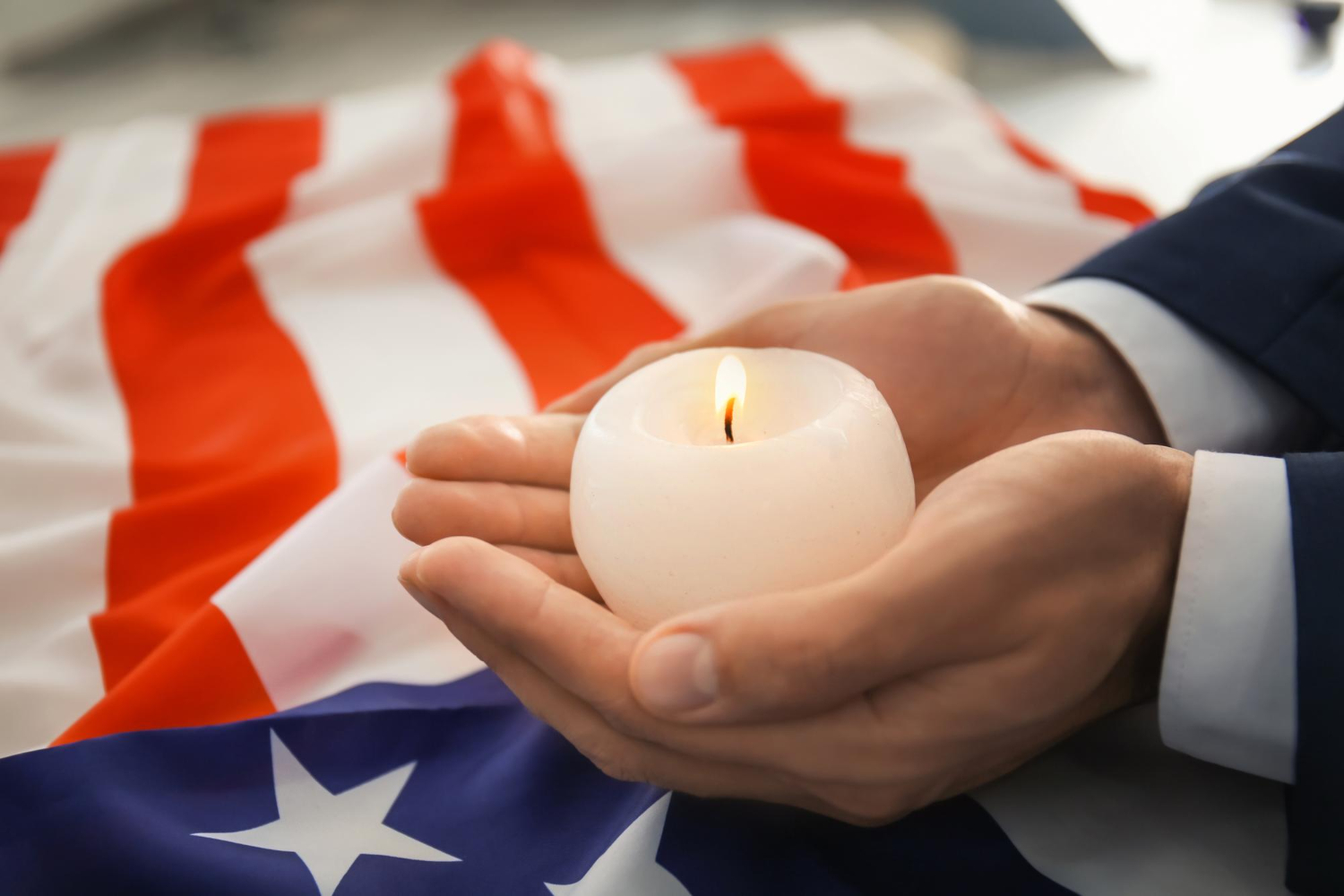
There is a version of Memorial Day that most Americans experience, the cookouts, the sales, the first real weekend of summer, the beaches filling up and the coolers packed with ice. It is a pleasant version, and there is nothing wrong with gathering and celebrating and enjoying the freedom that comes with a long weekend in late May.
But there is another version of Memorial Day. The real one. The one that exists underneath the noise and the festivities, quiet and patient and waiting to be acknowledged. It is the version that belongs to the families who set a place at the table that will never be filled again. To the parents who folded a flag and placed it in a box they keep somewhere they can find it but don’t always look at. To the friends who still reach for their phone to send a message to someone who isn’t there to receive it.
Memorial Day was created for them. And in the business of getting on with our lives, which is, after all, one of the things those who didn’t come home made possible, it is worth stopping to remember that.
Where It Began: The Origins of a National Day of Mourning
The story of Memorial Day begins in the aftermath of the Civil War, the bloodiest conflict in American history, a war that killed an estimated 620,000 soldiers on both sides and left barely a family in the country untouched by loss.
In the years immediately following the war, communities across the country began holding informal days of remembrance, visiting cemeteries, decorating graves with flowers, gathering to grieve collectively for the scale of what had been lost. These observances sprang up independently in dozens of towns, North and South, reflecting a grief so widespread and so deep that it demanded some form of public expression.
The first large-scale, formally organized observance took place on May 30, 1868, when General John A. Logan, commander of the Grand Army of the Republic, called for a national day of remembrance he called Decoration Day. On that day, flowers were placed on the graves of Union and Confederate soldiers at Arlington National Cemetery, a gesture that was simple, nonpartisan, and profoundly human.
Over the decades that followed, Decoration Day evolved into Memorial Day, expanded to honor American military personnel who had died in all wars, and was eventually declared a federal holiday. In 1971, Congress standardized it as the last Monday of May, a decision that created the long weekend we know today and, perhaps unintentionally, began the slow drift away from solemn remembrance toward something that felt more like the start of summer.
The meaning, however, never changed. Only the attention paid to it did.
The Weight of the Numbers
It is difficult to hold the full weight of American military sacrifice in your mind at once. The numbers are too large, too abstract, too removed from the individual human lives they represent. But the attempt matters, because Memorial Day is not about an abstraction. It is about people.
More than 1.1 million Americans have died in military service to this country across all conflicts, from the Revolutionary War to the wars being fought today. Each of those 1.1 million was someone’s child. Most were someone’s sibling. Many were someone’s parent, spouse, or closest friend. Every one of them had a life full of specifics, a favorite food, a way of laughing, a collection of habits and memories and plans for the future, that ended before it should have.
The Civil War claimed approximately 620,000 lives. World War I took more than 116,000 Americans. World War II, the deadliest conflict in human history, cost this country more than 405,000 lives over four years of fighting across two oceans. The Korean War, sometimes called the Forgotten War, a name that carries its own quiet indictment, claimed more than 36,000 Americans. Vietnam took more than 58,000, a number memorialized in black granite on the National Mall in Washington, where visitors still leave flowers and photographs and letters at the base of a wall that reflects their own faces back at them.
The American Battle Monuments Commission oversees 26 overseas military cemeteries and 30 memorials honoring the Americans who gave their lives in service abroad. Their work is a reminder that American sacrifice extends far beyond our own borders, that there are white crosses and Stars of David in fields across France, Italy, the Philippines, and beyond, marking the resting places of Americans who never came home.
These are not statistics. They are people. And Memorial Day is the day set aside to say so.
The Families Left Behind: What Memorial Day Means Up Close
The experience of Memorial Day looks completely different depending on where you’re standing. For the majority of Americans, it is a welcome break, a bridge from spring to summer, a reason to gather and eat and rest. For Gold Star families — those who have lost a family member in military service, it is one of the hardest days of the year.
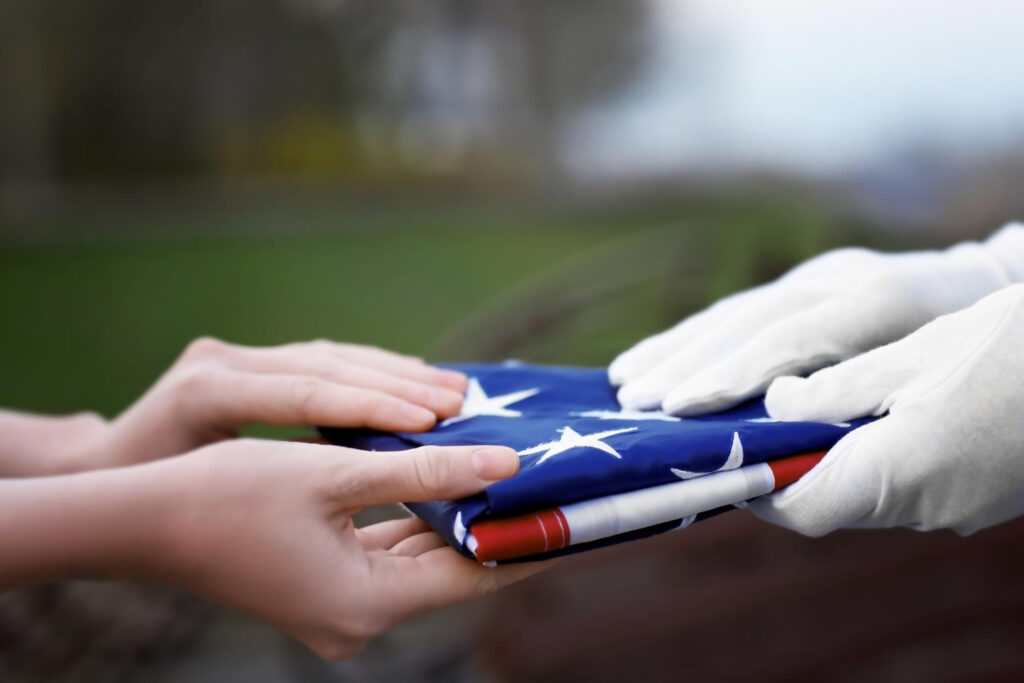
A Gold Star family receives a flag. They receive a folded triangle of fabric that represents a life, and they carry it forward into every subsequent holiday, every family gathering, every moment when an empty chair is felt more than seen. They navigate a world that has largely moved on from the loss that continues to define their daily reality.
Gold Star mothers in particular carry a grief that is almost impossible to articulate. They raised a child through every stage of life, through scraped knees and school plays and first heartbreaks and the particular pride of watching someone become who they were meant to be, and then they watched that child choose service, and then they received the news that no parent should ever receive.
They are the reason Memorial Day exists. Not as a concept, not as a policy, but as a specific, human acknowledgment that their loss was real and that it mattered and that this country has not forgotten.
The Gold Star Families Memorial Foundation works to honor fallen service members and support the families they left behind, a reminder that the work of remembrance extends far beyond a single day on the calendar and requires active, ongoing commitment from the communities these families live in.
The Difference Between Veterans Day and Memorial Day
One of the most common and understandable sources of confusion around Memorial Day is how it relates to Veterans Day, observed each November. The distinction is important and worth understanding clearly.
Veterans Day honors all who have served in the United States military, living and deceased, in wartime and in peace. It is a celebration of service, a day to thank the men and women who chose to wear the uniform and to acknowledge the sacrifice that choice represents regardless of its outcome.
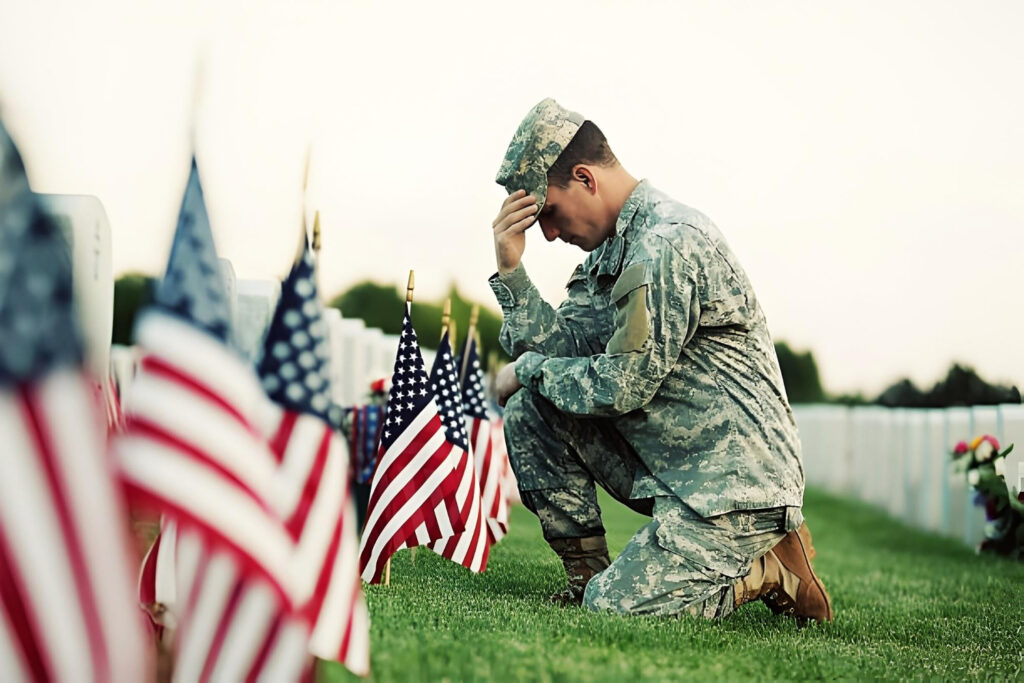
Memorial Day is specifically and exclusively for those who died in military service. It is not a day to thank veterans, though veterans absolutely deserve gratitude every day. It is a day to mourn the fallen. To remember the specific, irreplaceable people who did not return. To sit with the grief of that loss, even briefly, even imperfectly, in the midst of whatever else the long weekend brings.
Understanding that distinction isn’t pedantic. It matters because it shapes how we observe the day. A thank-you to a veteran on Memorial Day, while well-intentioned, subtly shifts the focus away from those who can no longer receive thanks. The more fitting acknowledgment on Memorial Day is quieter, a moment of reflection, a visit to a cemetery, a genuine engagement with the stories of those who gave everything.
The National Moment of Remembrance, established by Congress in 2000, calls on all Americans to pause for one minute at 3:00 PM local time on Memorial Day, to stop, wherever they are and whatever they are doing, and remember. It is a small ask. It is the least we can offer.
Memorial Day in the American Tradition: Ceremony, Ritual, and Remembrance
Across the country, communities mark Memorial Day with ceremonies that connect the present to the past in ways that feel both ancient and deeply necessary.
At Arlington National Cemetery, the Tomb of the Unknown Soldier is guarded every hour of every day of every year, a continuous vigil that does not pause for weather, for holidays, or for the passage of time. On Memorial Day, a wreath-laying ceremony takes place at the Tomb, attended by the President or Vice President, military leadership, and thousands of civilians who come to witness an act of national mourning performed with the precision and gravity it deserves.
In small towns across America, local Memorial Day parades wind through main streets that haven’t changed much in decades. Veterans march or ride. Scouts carry flags. Local officials speak words that are sometimes eloquent and sometimes simply sincere, which is often enough. Children who may not yet fully understand what they’re witnessing absorb something anyway, a sense that this day is different, that the people being honored matter, that some things are worth stopping for.
In cemeteries from Maine to California, volunteers place small American flags at the graves of veterans, a practice that extends the Decoration Day tradition of adorning the resting places of the fallen with something living and bright. The flags will flutter through the weekend and then be carefully collected, because even that gesture is treated with care.
These rituals exist because human beings need ritual. We need forms and structures and repeated gestures to hold grief that would otherwise be too formless to carry. Memorial Day’s ceremonies are not empty tradition, they are the scaffolding that allows grief to be shared, and sharing makes it bearable.

What We Owe the Fallen: A Reflection on Remembrance
There is a question worth sitting with on Memorial Day, even briefly, even uncomfortably: what do we owe the people who died so that we could live as we do?
The easy answer is gratitude. But gratitude without content is just a feeling. The more demanding answer, the one that actually honors the fallen, involves something more active. It involves paying attention. It involves learning the names and stories of the people behind the statistics. It involves supporting the families and communities that carry the weight of military loss every day, not just on the last Monday of May. It involves being worthy, in the way we conduct our lives and our democracy and our communities, of the price that was paid.
That is a high standard. None of us meets it perfectly. But the aspiration matters. The reaching toward it matters. And Memorial Day is the day set aside to renew that aspiration, to look up from the ordinary business of living and acknowledge, with whatever sincerity we can muster, that we are here because others are not.
The American Legion has championed the true meaning of Memorial Day for more than a century, working to preserve the solemn character of the observance and to support the veterans and Gold Star families who carry its meaning in their daily lives. Their resources on the history and proper observance of Memorial Day are worth exploring as the holiday approaches.
For the Food Service Community: Honoring the Day While Serving It
Restaurants and food service operations across the country will be among the busiest businesses in America this Memorial Day weekend. Families will gather over meals. Communities will celebrate. And the people who make those gatherings possible, the cooks and servers and managers working long shifts so others can enjoy their holiday, will be doing what they always do: showing up, feeding people, creating the conditions for connection.
There is something quietly honorable in that work. The restaurant industry, in its own way, is built on service, on showing up for others, on taking care of people, on doing the unglamorous, essential work that makes community life possible. That’s not a bad way to spend a day set aside to honor service in its most profound form.
For the food service professionals reading this who want to honor Memorial Day while continuing to build strong, compliant, well-trained operations, making sure your team holds valid florida food handler certificates is one of the most foundational investments you can make. A properly trained team is a safer team, a more confident team, and a team better equipped to deliver the kind of experience that brings guests back long after the holiday weekend is over. If you’re looking for florida food handler certificates best price, Ken Kuscher’s resources are available to help your operation stay compliant, professional, and ready for every busy season ahead.
Remember Them
This Memorial Day, before the first burger goes on the grill and before the first cold drink is opened and before the weekend fully unfolds into everything a late May holiday can be, take a minute. One minute, at 3:00 PM, wherever you are.
Think of someone who didn’t come home. You may not know their name. You don’t need to. Think of the idea of them, the specific, irreplaceable human being who had plans and people and a whole life ahead of them, and who gave all of it so that you could have yours.
That minute is the whole point of the day. Everything else is just everything else.
Florida Food Handler Certificates
Avoid fines by ordering your Florida Department of Business and Professional Regulation-approved Food Worker Program certificates today. They’re available for just $4 each. Program #5552749.
Place your order online here. For additional information, you can call (561) 703-7196.
***Please note that the insightful and engaging content provided on our platform is crafted by our dedicated Marketing Department’s content writing team. While Ken Kuscher is the esteemed figure and expert within our industry, the articles and blog posts available are not personally authored by Ken.